Mozilla
DidThis
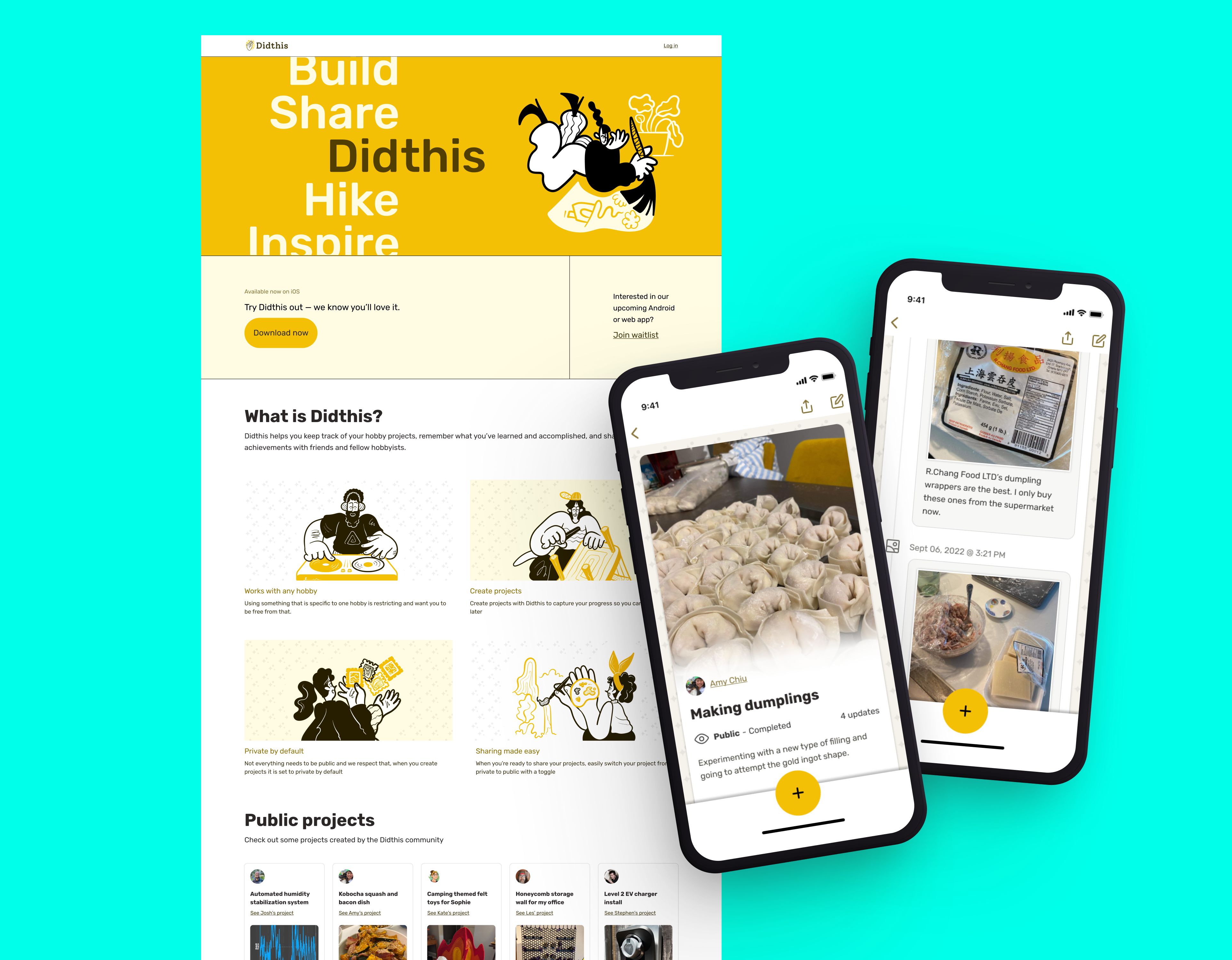
A project journaling app for hobbyists who want to document and share what they’re making with people they care about.
Overview
DidThis is a project journaling app built for hobbyists who want to document their work and share progress with a small, trusted audience.
I led the design end-to-end — starting with discovery research and facilitating the analysis and synthesis of our findings, all the way through to launching on the Apple App Store — working closely with a small, cross-functional team.
Our work on this project was an initiatve set out by Mozilla to explore healthy social media alternatives.
Problem
How might we give hobbyists a space to document and share their passions without the noise and risk of traditional social platforms?
Discovery research
Hobbyists and their challenges online
We spoke to many different kinds of hobbyists and narrowed in on a particular group of them that were:
- Passionate about sharing their work, but not driven by revenue or personal branding.
- Wanted to connect with others who shared their interests.
- Didn’t feel technically confident enough to build and maintain their own site.
- Relied primarily on social media and had never owned a blog or personal website.
Challenges we've heard from them
- Distrust in large social platforms
- More frequent exposure to negative comments as their audiences grew
- No satisfying middle ground between a full personal site and a public social profile.
Concept testing
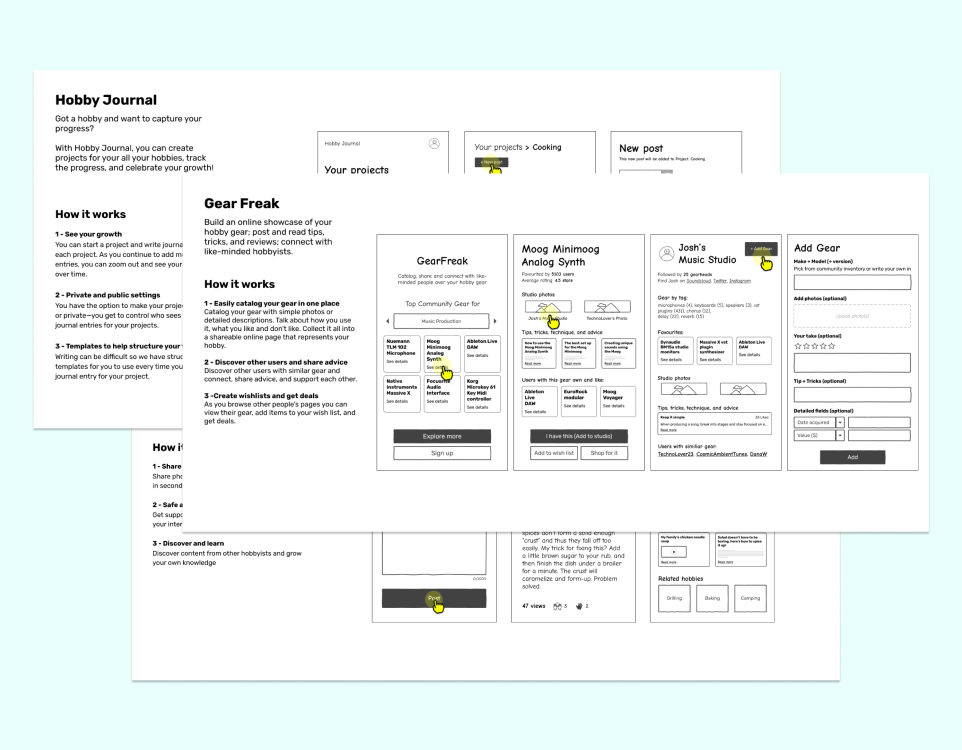
Our team brainstormed three concept directions and wanted to test it with hobbyists to get their feedback. I created visual stills for each concept and designed a one-pager to be used as an artifact in our testing sessions.
During the user testing sessions, we had them rank the concepts against each other and the features as well. This helped us mix and match the well resonated features in each concept and also to prioritize what to design and build first as a team.
Brand identity
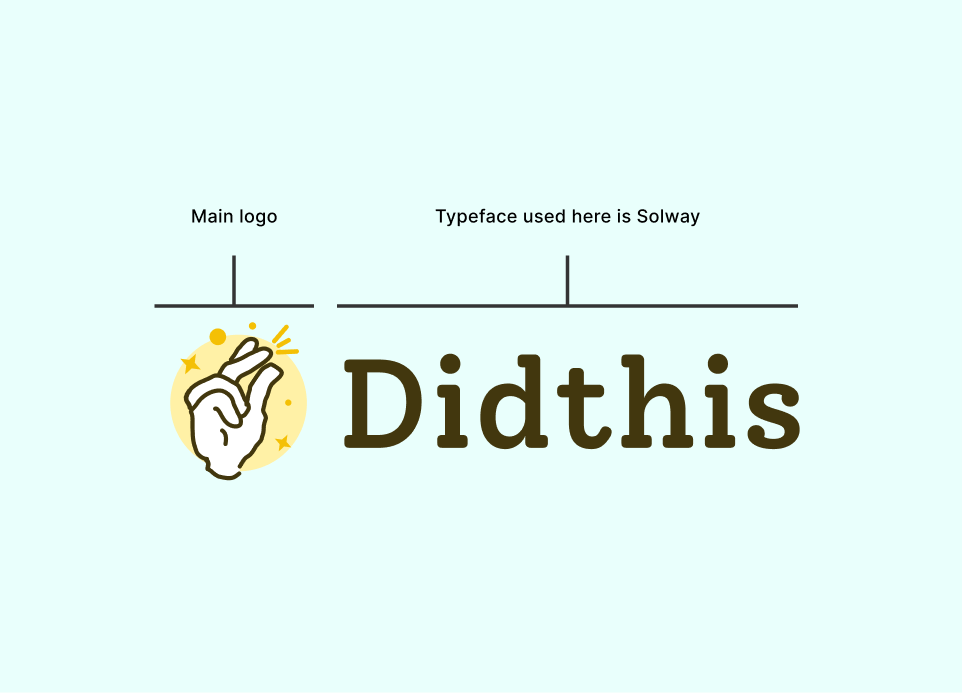
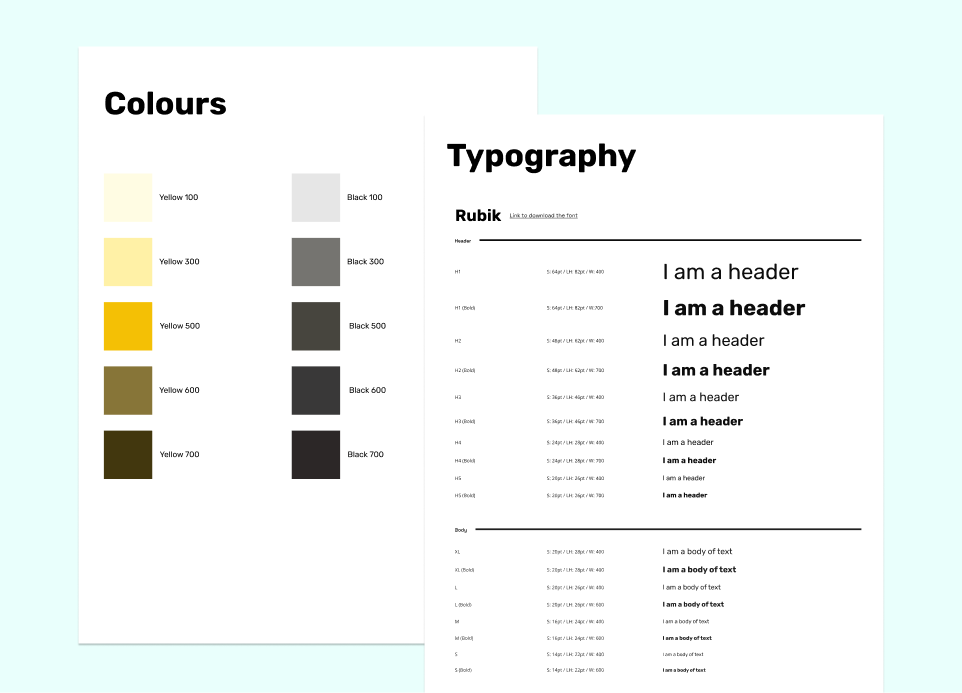
I developed the brand identity for our product, with yellow at the heart of it — a colour that naturally communicates community, positivity, and energy. Since we were focused on getting an MVP to market first, I kept the brand guidelines intentionally lean — just enough to build consistently and maintain a coherent visual identity. The expectation was always that the palette and guidelines would grow and mature as the product evolved.
The challenge with yellow is that it can struggle with accessibility, particularly for text legibility. To work around this, I built a palette of deeper, richer shades — leaning into dark browns for body text and readable content, while reserving yellow for visual emphasis and key backgrounds. The product's overall light, airy aesthetic also works in yellow's favour — it lands with real presence against clean backgrounds without needing to compete for attention.
Design
Onboarding
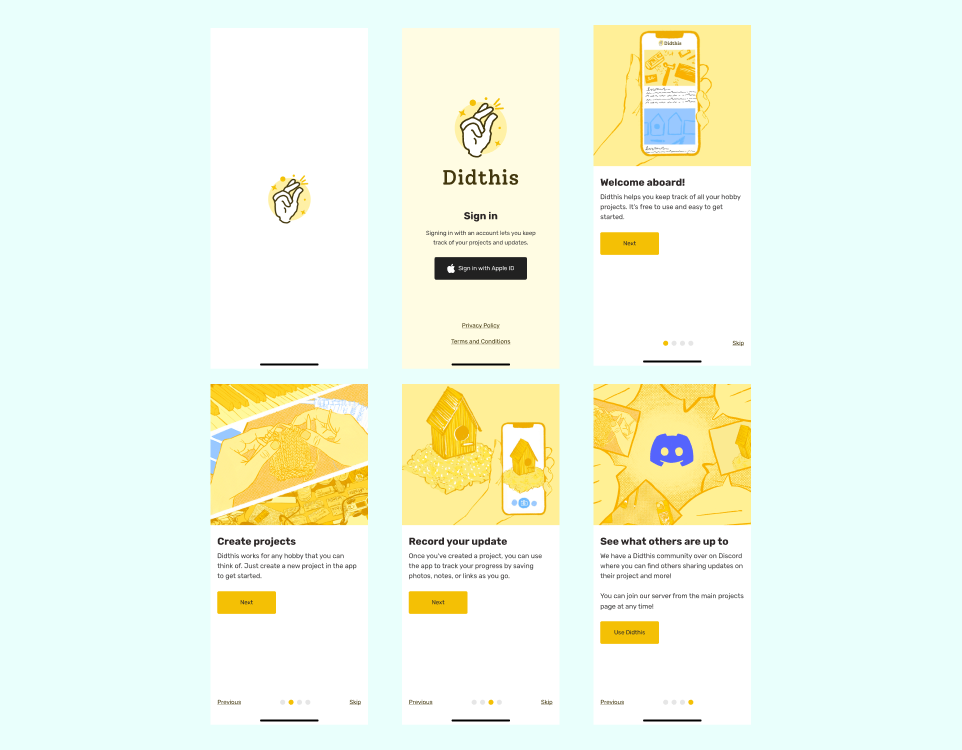
New hobbyists who sign up with us go through a short, supportive carousel to explain how Didthis works and set expectations.
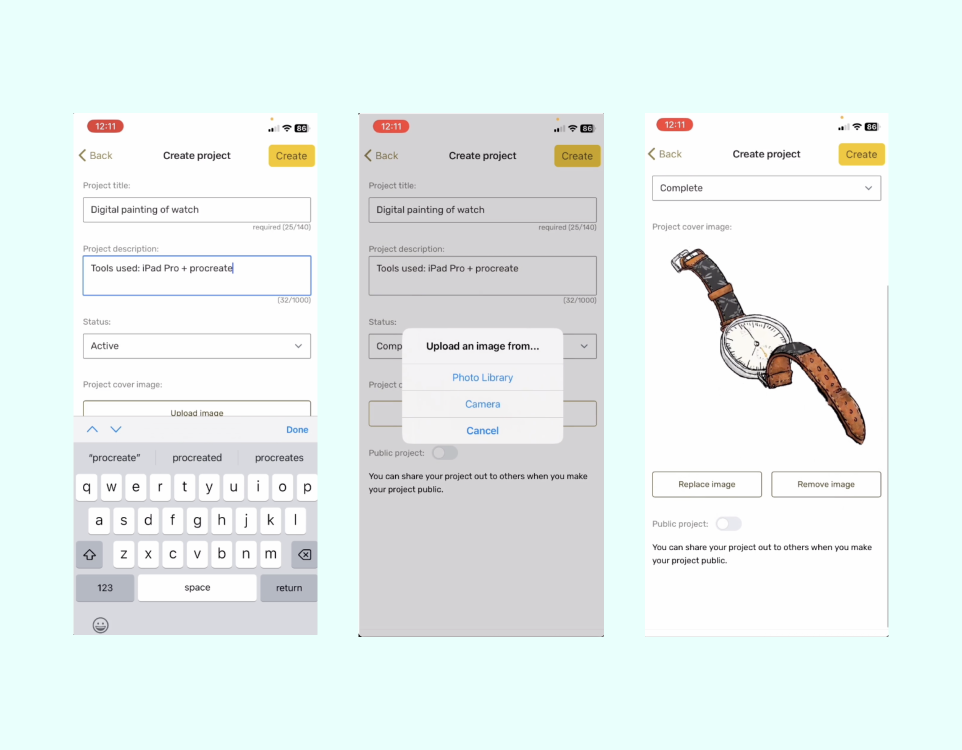
Create a project
Hobbyists can create projects and choose a hero image to showcase the work at a glance along with the project description, status, start and completion dates.
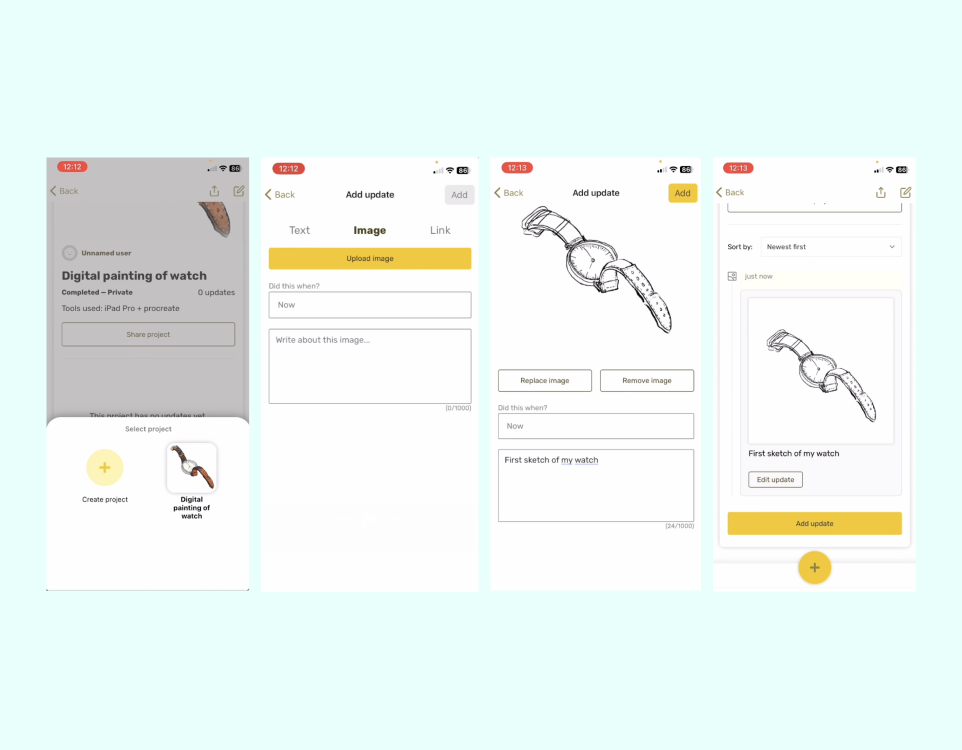
Add updates to projects
Hobbiysts can add updates as a text, image, or link to reflect the real, messy process of making things.
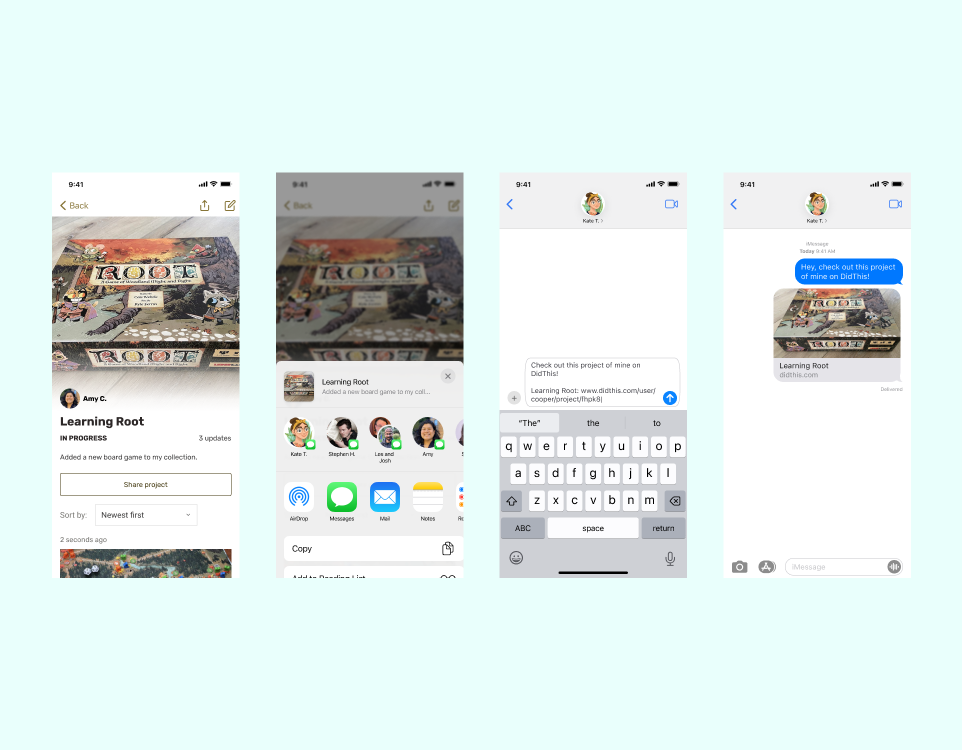
Share a project
Hobbyists can send a link to their project directly to friends and others.
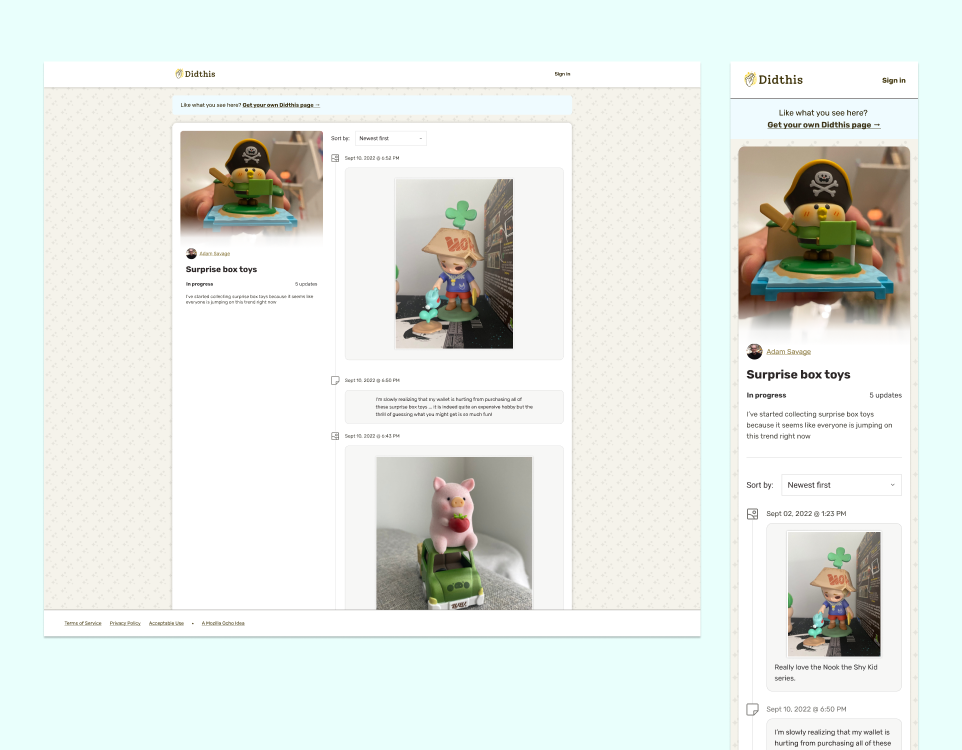
Viewing public project pages
Hobbyists can set their project to public and share it with people without needing them to create an account or log in first.
Community & feedback loop
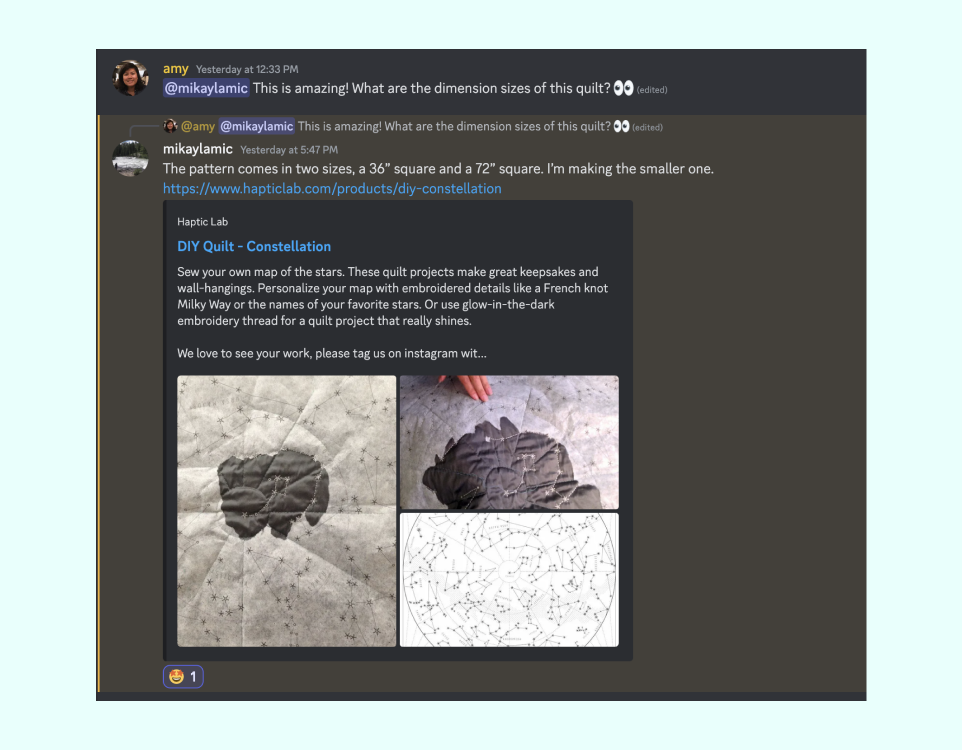
Alongside the product, we launched a Discord server and a Discord bot to let users share updates with the DidThis community. This gave us a tight feedback loop and a space where people could see what others were working on.
We saw a wide range of projects—from post‑surgery recovery journals, to intricate dioramas, to a constellation quilt documented from first stitch to finish.
Launch & outcomes
DidThis launched in 2023 as an experimental Mozilla product. Highlights include:
- First pod in the New Products team to ship a working product to market in a short timeline
- Launching first as a responsive web app to test the market, followed by an iOS app.
- Reaching 80+ active users and 150+ Discord community members
Lessons
- Building new products requires strong conviction. Discovery can be messy, so clear guardrails and tracked assumptions are essential to keep the team aligned.
- When running multiple interview rounds with changing variables, rigorous documentation is critical to understand what changed and what you actually learned.
- Designing the “social layer” of a product is hard and doesn’t need to be solved all at once. Sometimes the best move is to set aside the unknowns, focus on what you do know, and make steady, incremental progress.
Acknowledgements
Stephen, our PM who showed conviction every step of the way and pushed us to get the first working version of our app.
Josh, our engineer extraordinaire that helped build the Didthis app from the ground up, amazing piano player.
Les, for jumping in to help us set up the Discord bot for our server. It made our community feel even more alive and engaging.
Setareh and Marianne, amazing user researchers, both who supported our team with their expertise by reviewing our test plans and providing feedback.
Anais, talented product designer, thanks for jumping in to help me out with post-launch project work, it was so much fun jamming with you.
Kate, talented visual designer thanks for helping out with the illustrations for our onboarding flow and jumping in to help make minor UI tweaks.